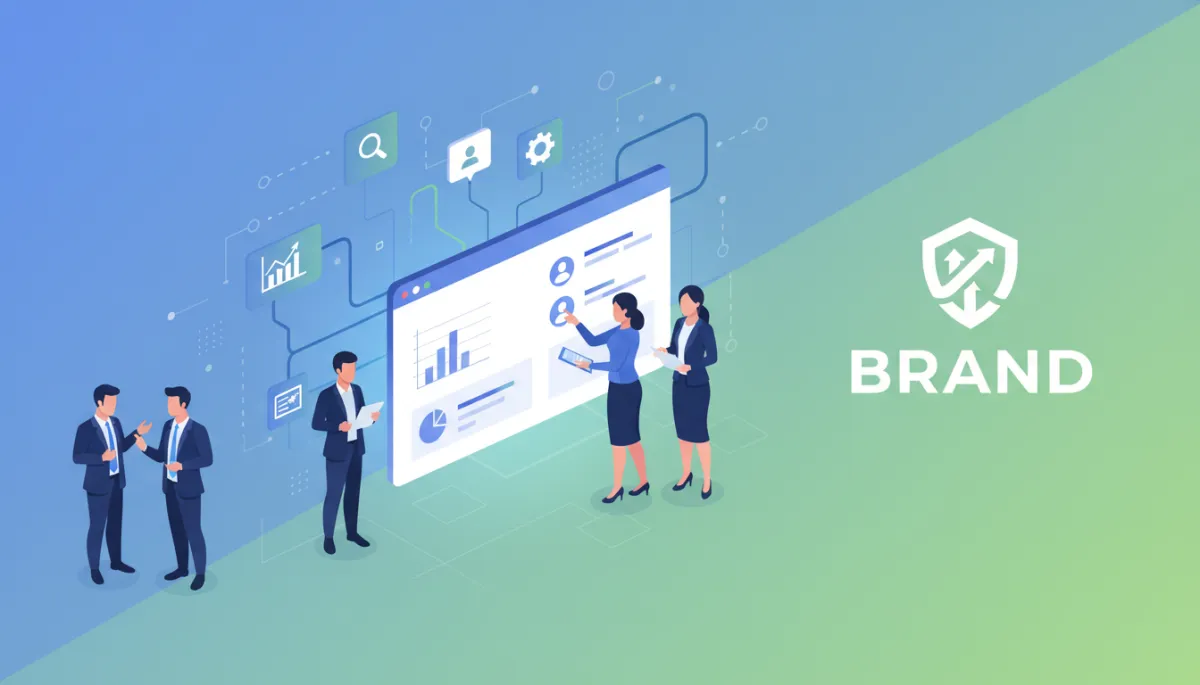
Sell CRM Services Under Your Own Brand
CRM Services, White Label CRM, Brand Marketing, Lead Generation, Small Business Strategy, Marketing Professionals
How to Sell CRM Services Under Your Own Brand
Discover how agencies and growing businesses can package powerful CRM services under their own brand to drive lead generation, deepen client relationships, and unlock new recurring revenue streams.
Why White Label CRM Matters Now for Lead Generation
Small and medium businesses in Canada are under pressure: ad costs are rising, leads are harder to reach, and prospects expect fast, personalized follow-up across email, SMS, and social. By 2026, AI-driven automation, personalization, and social media integration are shaping how leads are captured and nurtured, while privacy rules and data security expectations keep tightening (Forbes, MarketingProfs, Social Media Today). In this environment, a strong, branded CRM is no longer a “nice to have” — it’s the backbone of modern lead generation.
Definition: Selling CRM services under your own brand (often via a White Label CRM) means reselling a proven CRM platform as if it were your own software — with your logo, colours, pricing, and packages — while the technology and infrastructure are managed by a specialist provider like LeadMagno. In one sentence: you own the relationship, margins, and branding, while your white label partner owns the heavy tech lifting.
What Matters Most When Branding CRM Services?
The biggest success factor is positioning the CRM as a business growth system, not “software access.” Clients don’t care about menus and modules; they care about:
More qualified leads and faster follow-up
Fewer missed calls, emails, and texts
Clear visibility on pipelines, bookings, and revenue
Your brand promise should connect CRM features directly to those outcomes — for example, LeadMagno’s focus on “capture, nurture, and convert more leads with smart automation” speaks to results, not tools.
Common Mistakes When Selling White Label CRM
Leading with features instead of use cases. Micro-question: Can a busy owner see in 30 seconds how this saves them time or wins more customers?
Underpricing to “be affordable.” This attracts the wrong clients and leaves no margin for onboarding or support.
Selling access without done-for-you setup. Most SMBs won’t configure pipelines, automations, or tags on their own.
Ignoring data privacy and security messaging. In a world of GDPR-style regulations and rising concern, this erodes trust fast.
Contrarian insight: The biggest risk isn’t “clients discovering the original platform” — it’s you becoming a support desk for a tool you haven’t fully operationalized. Systems and processes matter more than secrecy.
Strategic Opportunities and Focus Areas
With the global CRM market projected to surpass USD 100–126 billion by 2026 and growing at double-digit CAGR (Fortune Business Insights, The Business Research Company), there is room for niche, branded solutions — especially in Canada’s SMB space. Cloud CRM already represents about 87% of deployments, which makes white label models far easier to scale.
High-impact focus areas for agencies and service providers include:
Vertical specialization (e.g., real estate, home services, clinics) with tailored pipelines and campaigns
Automation-first lead nurturing — email, SMS, and voicemail drops triggered within minutes of an inquiry
Revenue-focused reporting dashboards that show booked appointments, show rates, and closed deals

-toned dashboard view of a branded CRM showing pipelines, lead sources, and automation...
Agencies that bundle CRM with campaigns often increase client retention and recurring revenue.
Core Strategies, Execution Methods, and Operations
1. Package CRM as Part of a Growth System
Instead of “$X/month for CRM access,” sell growth bundles: lead generation + automation + reporting. For example, LeadMagno partners often include:
Ad campaigns or SEO to drive traffic (adjacent function: marketing acquisition)
CRM workflows to capture form fills, calls, and social leads automatically
Sales enablement support: scripts, follow-up cadences, and pipeline reviews
2. Build Repeatable Systems & Operations
Ask: “If we sold this to 50 clients, could we onboard each one in under a week?” To get there, you need:
Standard pipelines, tags, and automations for each niche
Checklists for onboarding, training, and quarterly reviews
Clear internal ownership: who handles support, who handles strategy, who manages billing
3. Leverage Supporting Technologies
A strong White Label CRM should integrate with email, SMS, calendars, payment gateways, and ad platforms. AI-powered lead scoring, chatbots, and call tracking add further value. These tools connect CRM to adjacent business functions like customer service, billing, and fulfillment, making your branded solution “mission critical” instead of “nice software.”
Mini Case Study: Local Agency Turns CRM into Recurring Revenue
A Toronto-based marketing agency working with home service businesses partnered with LeadMagno to launch a white label CRM. Instead of selling “Facebook ads,” they repositioned as a Lead Management and Booking System under their own brand. They:
Pre-built pipelines for inquiries, estimates, and booked jobs
Automated SMS and email follow-ups within 5 minutes of every lead
Monthly review calls using CRM reports to show revenue impact
Within 9 months, CRM subscriptions represented over 40% of their recurring revenue, and client churn dropped because switching meant losing the system that powered their bookings — not just an ad vendor.
FAQs About Selling CRM Services Under Your Own Brand
1. Is white label CRM profitable for small agencies?
Yes — when bundled with strategy and support. Margins are strongest when you charge for setup, onboarding, and ongoing optimization instead of only charging a low monthly software fee.
2. How do I differentiate my branded CRM from big-name tools?
Focus on niche-specific workflows, Canadian market knowledge, and hands-on support — not on competing feature-by-feature with global vendors.
3. What about data privacy and security concerns?
Choose a provider that prioritizes encryption, secure hosting, and compliance, then make those safeguards part of your sales story and onboarding materials.
4. How much technical expertise do I need?
You don’t need to be a developer; you need to understand client workflows, map them into the CRM, and rely on your white label partner’s support and training.
5. Can I migrate clients from spreadsheets or other tools?
Yes, and migration is a high-value service. Offer data cleanup, list import, and pipeline rebuilding as a one-time project fee.
6. How does LeadMagno fit into a white label strategy?
LeadMagno provides the all-in-one marketing CRM — email, SMS, pipelines, automation, and reporting — while you bring the brand, niche expertise, and client relationships.
Final Takeaway: Turn CRM into a Growth Engine, Not Just Software
Selling CRM services under your own brand works best when strategy and execution are tightly linked: you position your offer around lead generation and revenue growth, implement proven systems and automations, and support clients with ongoing optimization. In a fast-changing market where cloud CRM is booming and SMBs can’t afford lost leads or scattered tools, a branded solution powered by a platform like LeadMagno can become the core of your business model. Book a free demo today and see how LeadMagno can power your own branded CRM offering — and help your clients capture, nurture, and convert more leads.


