GoHighLevel: Unified CRM, Marketing & Sales Platform
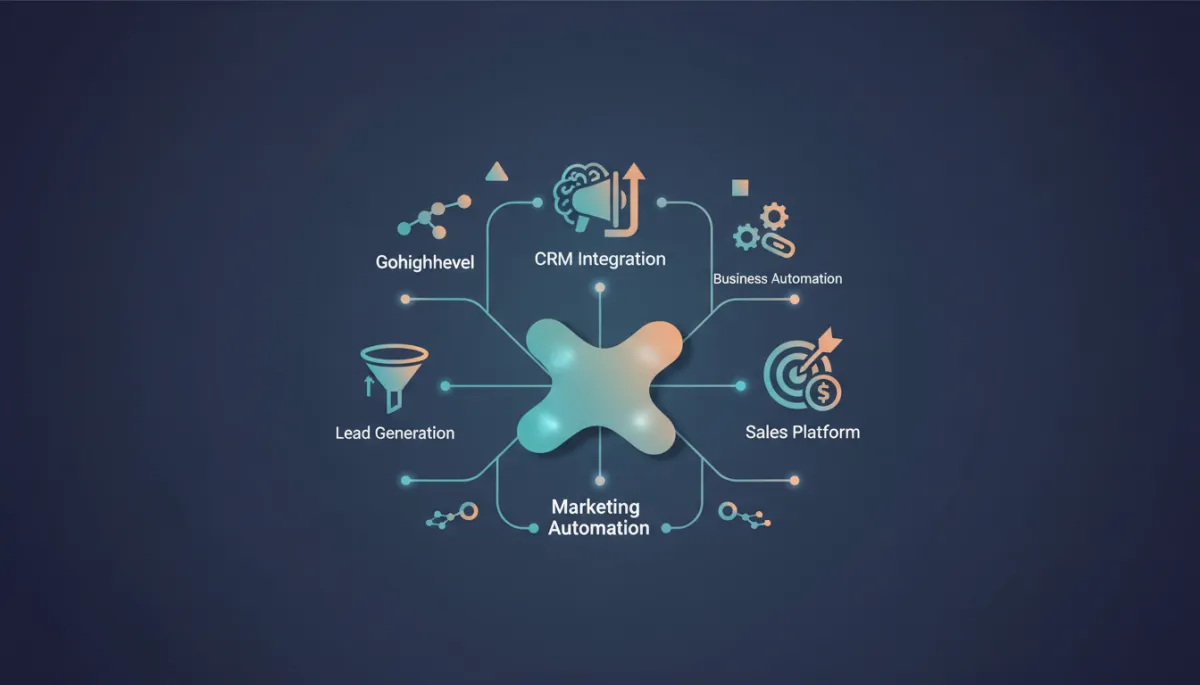
CRM Integration, Marketing Automation, Sales Platform, Business Automation
How GoHighLevel Becomes Your Unified Revenue Engine™
GoHighLevel has emerged as a powerful Unified Revenue Engine™—an operating system that synchronizes CRM Integration, Marketing Automation, Sales Platform capabilities, Business Automation, and AI‑driven workflows into one coherent model. For growth‑oriented agencies and businesses, this is not just convenient; it is strategically transformative. By orchestrating lead capture, nurturing, sales execution, onboarding, retention, and expansion through a single Revenue Orchestration System™, GoHighLevel reduces operational friction, improves visibility, and enables leaders to design scalable, data‑driven growth frameworks that compound over time.
Why Unifying CRM, Marketing, and Sales Matters
Most organizations still operate with a fragmented stack: one tool for email, another for SMS, a separate CRM, and yet another system for funnels and landing pages. Each handoff between tools introduces operational drag, data loss, and inconsistent customer experiences. GoHighLevel addresses this by placing Business Automation, Marketing Automation, and Sales Platform workflows inside a single, tightly integrated environment. The result is a cleaner pipeline, fewer manual steps, and a more reliable customer journey from first touch to closed deal and beyond.
Operational Value: Streamlining the Revenue Engine
1. A Single Source of Truth for Customer Data
At the core of GoHighLevel is its CRM Integration layer. Every lead, opportunity, and client record lives in one place, enriched by real‑time activity data: page visits, form submissions, email opens, SMS replies, and pipeline movements. Instead of reconciling spreadsheets and exporting lists between tools, teams work from a single, authoritative record of each contact. This reduces data entry, eliminates version confusion, and supports cleaner reporting across marketing and sales activities.
Operationally, this means less time spent searching for information and more time acting on insights. Sales professionals can see the full context of a lead’s journey—what funnel they entered, which campaigns they engaged with, and which offers they have already seen—before they make the first call. Marketers, in turn, can segment audiences based on pipeline stage, last activity, or deal value without leaving the platform.
2. Automated Lead Capture and Lead Routing
GoHighLevel’s funnel builder, forms, and survey tools act as the front door for Lead Generation. When a prospect completes a form on a landing page, books an appointment, or responds to a campaign, the contact is instantly created or updated in the CRM. From there, predefined workflows can assign the lead to the appropriate pipeline, tag them based on interest, and route them to the right sales representative or team. This eliminates manual triage and ensures that every lead is acknowledged promptly and consistently.
For operations leaders, the value lies in predictability. Instead of relying on individual habits, GoHighLevel enforces a standard operating procedure for lead handling. No lead is left unassigned, and every prospect experiences a defined, measurable sequence of touchpoints from the moment they enter the system.
3. Marketing Automation That Reflects the Entire Funnel
Traditional email tools automate campaigns in isolation. GoHighLevel’s Marketing Automation is built directly on top of the CRM and pipeline, enabling workflows that respond to both marketing behavior and sales status. You can trigger sequences when a deal moves stages, when an appointment is booked or missed, or when a contact stops engaging for a defined period. SMS, email, voicemail drops, and even social messaging can be orchestrated from one automation builder, reducing the need to coordinate across multiple platforms.
This integrated approach improves operational value by reducing manual follow‑up and ensuring that every stage of the funnel has an associated communication strategy. It also simplifies compliance and brand consistency, since templates and messaging are centrally governed within GoHighLevel rather than scattered across disconnected tools.
4. Sales Platform Capabilities That Support Daily Execution
From a sales operations perspective, GoHighLevel functions as a full‑fledged sales platform. Visual pipelines provide a clear view of deal stages, expected revenue, and bottlenecks. Sales tasks, call logs, notes, and appointment histories are tied directly to each opportunity. Automated reminders and task creation ensure that follow‑ups are not left to memory, while integrated calling and messaging allow reps to work from a single screen rather than toggling between a CRM and communication tools.
The operational payoff is measurable: shorter response times, higher follow‑up consistency, and better visibility for managers into what activities drive closed revenue. Because the CRM Integration is native, reporting on conversion rates, sales cycle length, and campaign influence becomes significantly more reliable than when data is stitched together from multiple sources.
5. Business Automation Beyond Marketing and Sales
GoHighLevel’s automation engine extends beyond Business Automation. Agencies can automate client onboarding, recurring check‑ins, review requests, subscription renewals, and even internal notifications to finance or delivery teams. By designing workflows that span the entire customer lifecycle—acquisition, fulfillment, retention, and advocacy—organizations can reduce administrative workload and maintain a consistent standard of service at scale.
📌 Key Takeaway: The operational value of GoHighLevel lies in its ability to replace fragmented tools with a unified, automation‑driven system that supports every step of the revenue process.
Strategic Frameworks: Designing Growth with GoHighLevel
1. The End-to-End Revenue Loop Framework
To unlock the full power of GoHighLevel, it is useful to think in terms of an end‑to‑end revenue loop rather than isolated campaigns. A simple strategic framework includes four interconnected stages:
Attract: Use funnels, landing pages, and ads to drive traffic into dedicated GoHighLevel forms and calendars for efficient Lead Generation.
Nurture: Deploy Marketing Automation sequences (email, SMS, voicemail) that educate, qualify, and warm prospects based on their behaviour and profile.
Convert: Manage opportunities through visual pipelines, structured follow‑ups, and appointment workflows inside the Sales Platform layer.
Delight & Expand: Automate onboarding, feedback loops, review collection, and upsell campaigns through Business Automation workflows.
GoHighLevel enables this loop to operate continuously, with each stage feeding data back into the CRM Integration layer. That feedback allows leaders to refine targeting, adjust offers, and optimize sales processes based on actual performance rather than assumptions.
2. The Lifecycle Segmentation Framework
A second strategic framework focuses on lifecycle segmentation. Instead of treating all contacts the same, GoHighLevel allows you to group them by stage, engagement level, and value. A simple but powerful segmentation model might include:
New Leads: Recently captured, not yet qualified. Placed in intensive education and discovery sequences via Marketing Automation.
Sales‑Ready Prospects: Leads that have engaged with key assets, booked calls, or hit a defined score. Routed to the Sales Platform with task‑driven follow‑up.
Active Clients: Customers in delivery or onboarding, receiving automated check‑ins, support sequences, and satisfaction surveys through Business Automation.
Advocates & Lapsed Clients: Contacts invited into referral programs or reactivation campaigns, again managed from the same GoHighLevel environment.
By aligning tags, pipelines, and automation triggers with this lifecycle model, organizations can deliver more relevant messaging and prioritize resources where they have the greatest impact. This is a strategic use of CRM Integration: the CRM is no longer just a database, but the engine that drives tailored experiences across every touchpoint.
3. The Agency-as-a-Platform Framework
For agencies, GoHighLevel enables a distinctive strategic framework: agency‑as‑a‑platform. Instead of simply managing campaigns, agencies can deploy white‑labeled GoHighLevel accounts to clients, bundling CRM, Marketing Automation, and Sales Platform capabilities as part of a recurring service. Operationally, this transforms the agency from a project‑based vendor into a systems partner embedded in the client’s daily operations.
This approach supports higher retention, predictable recurring revenue, and deeper strategic influence. Agencies can standardize proven funnels, follow‑up sequences, and Business Automation workflows, then replicate them across verticals or client segments. GoHighLevel’s multi‑account structure and snapshot features make it feasible to scale this framework without recreating assets from scratch every time.
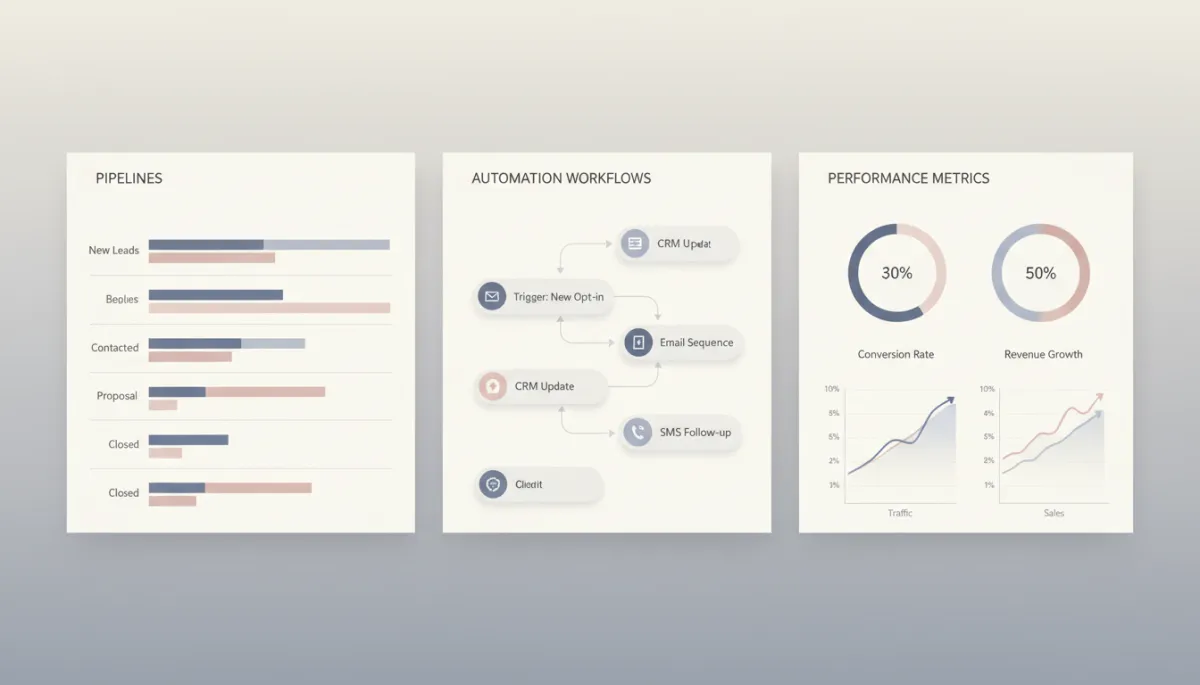
Standardized GoHighLevel snapshots let agencies deploy proven revenue systems in days, not months.
Practical Examples: How Professionals Use GoHighLevel Day to Day
Example 1: Local Service Business Increasing Show-Up Rates
Consider a local dental clinic working with an agency that implements GoHighLevel. Previously, the clinic used separate tools for online booking, email reminders, and manual phone calls. No‑shows were frequent, and staff spent hours each week chasing confirmations. With GoHighLevel in place, the agency builds a complete Lead Generation and appointment system:
Prospects click on ads and land on a GoHighLevel funnel page offering a free check‑up consultation.
When they book through the integrated calendar, contacts are created in the CRM with relevant tags and pipeline placement.
A Marketing Automation workflow sends immediate confirmation, a reminder sequence (email and SMS), and a pre‑visit questionnaire.
If a prospect does not confirm, GoHighLevel triggers a follow‑up message and optionally notifies the front desk to call.
Operationally, the clinic experiences a measurable reduction in no‑shows and a decrease in manual reminder calls. Strategically, the agency can demonstrate clear ROI, supported by GoHighLevel’s built‑in reporting on appointment completion rates and pipeline conversion. The combination of CRM Integration, Marketing Automation, and Business Automation produces tangible business outcomes with minimal additional staff effort.
Example 2: B2B Consultancy Shortening Its Sales Cycle
A B2B consultancy selling high‑value retainers often faces long, complex sales cycles. Using GoHighLevel as its central Sales Platform and CRM, the firm designs a structured pipeline: initial inquiry, discovery call, proposal sent, negotiation, and closed‑won or lost. Each stage is tied to specific automation and tasks:
When a prospect downloads a lead magnet, they enter a nurturing sequence that educates them on the consultancy’s methodology and case studies.
Once they book a discovery call, the contact is moved to the appropriate pipeline stage, and GoHighLevel automatically sends pre‑call materials and a calendar invite.
After the proposal is sent, a follow‑up sequence is triggered, combining scheduled check‑in emails, SMS nudges, and internal reminders for the account executive to call at defined intervals.
Over time, the consultancy uses GoHighLevel’s reporting to identify which assets and touchpoints correlate with higher close rates and shorter decision times. They refine their Marketing Automation and sales scripts accordingly. The strategic framework here is data‑driven optimization: CRM Integration provides the data, the Sales Platform structures the process, and Business Automation executes consistent follow‑up without overloading the team.
Example 3: Agency Productizing Its Services with Snapshots
A marketing agency specializing in fitness studios decides to move beyond one‑off campaigns and build a scalable, repeatable service model. Using GoHighLevel, the agency develops a complete vertical solution:
Lead Generation funnels for free trials and challenges, with forms integrated directly into the CRM.
Marketing Automation for confirmation, reminders, and motivational messaging during the challenge period.
A Sales Platform pipeline for tracking prospects from trial to membership, complete with task automation for follow‑ups after each visit.
Business Automation workflows for post‑signup onboarding, upsells to premium packages, and referral requests after key milestones.
The agency packages this entire system into a GoHighLevel snapshot and deploys it to each new studio client with minimal customization. Operationally, this reduces implementation time and ensures consistency. Strategically, it positions the agency as a provider of a proven, platform‑based growth system rather than a collection of ad‑hoc services. The deep use of GoHighLevel’s CRM Integration and automation capabilities becomes a competitive advantage that is difficult for competitors to replicate quickly.
Implementing GoHighLevel Effectively: Professional Considerations
Aligning Workflows with Existing Processes
While GoHighLevel offers extensive flexibility, the most successful implementations begin with a clear understanding of current processes. Professionals should map their existing lead flow, sales steps, and client lifecycle, then translate these into GoHighLevel pipelines, automations, and campaigns. This avoids the common pitfall of building complex workflows that do not reflect how the organization actually operates, which can undermine adoption and dilute the platform’s operational value.
Establishing Governance and Data Standards
Because GoHighLevel becomes the central repository for customer and prospect data, it is important to define standards for tags, custom fields, pipelines, and naming conventions. Clear governance ensures that CRM Integration remains clean and that reporting remains trustworthy as the system scales. Assigning an internal owner or small steering group to oversee structure, automation changes, and user training can significantly improve long‑term outcomes.
Measuring What Matters
Finally, professionals should approach GoHighLevel with a measurement mindset. Decide which metrics will define success—lead response time, show‑up rate, pipeline velocity, close rate, lifetime value—and configure dashboards and reports accordingly. Because the platform consolidates Marketing Automation, Sales Platform activity, and Business Automation workflows, it can provide a comprehensive view of the revenue engine. Regular review cycles, informed by this data, turn GoHighLevel from a tool into an ongoing strategic asset.
Conclusion: GoHighLevel as a Strategic Growth Platform
GoHighLevel is more than a collection of features. By combining CRM Integration, Marketing Automation, Sales Platform capabilities, and Business Automation in a single environment, it enables organizations to redesign how they attract, convert, and retain customers. The operational value is immediate—fewer tools, less manual work, and more consistent execution. The strategic value emerges over time, as data accumulates, frameworks mature, and teams learn to leverage automation to support higher‑value human interactions.
For professionals responsible for growth, client success, or operational excellence, GoHighLevel offers a practical path to building a modern, integrated revenue engine. When implemented with clear strategic frameworks and grounded in real‑world processes, it becomes not just a platform, but the backbone of a scalable, predictable, and data‑driven business.


