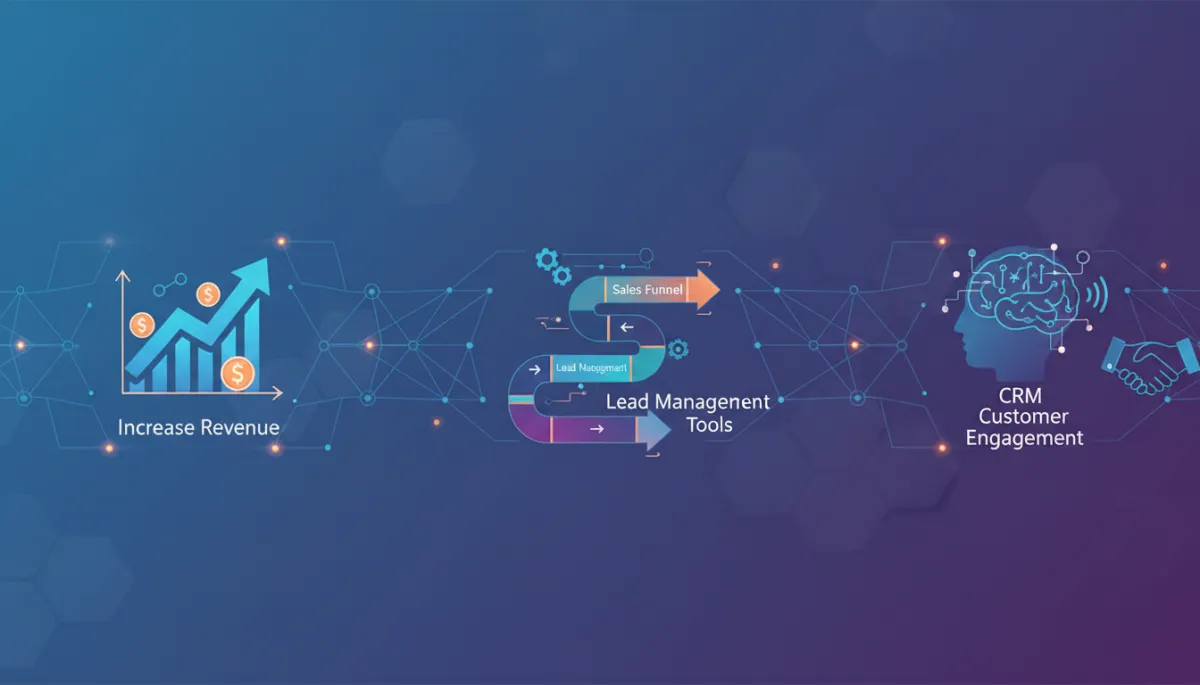
Boost Revenue with CRM Automation Strategies
CRM Strategies, Automation, Revenue Growth
CRM Automation Strategies That Increase Revenue for Businesses and Agencies
Done right, CRM automation turns your database into a predictable revenue engine. For businesses and agencies, the right mix of CRM strategies, automation tools, and smart processes can boost customer engagement, plug leaks in your sales funnel, and drive measurable growth.
📌 Executive Diagnostic: Is Your CRM Helping or Hurting Revenue?
Are leads contacted within five minutes?
Do sales and marketing share the same data?
Can leadership see pipeline health instantly?
Are follow-ups automated?
Can you identify lost opportunities?
📌 Key Takeaway: If the answer is “no” to most of these questions, your CRM is functioning as a database—not a revenue engine.
Start with Clear CRM Strategies, Not Just More Tools
Many teams rush to buy automation tools but skip the strategy. Effective CRM strategies begin with three questions: Who are our best customers, what journey do we want them to follow, and where are the biggest drop‑offs in our current process? Map your ideal customer journey from first touch to renewal, then decide which steps should be automated, assisted, or handled manually. This ensures that every automation directly supports your goal of increasing revenue, rather than creating noise or duplicating effort.
Contrarian Insight: Most CRM Problems Are Not CRM Problems
Businesses often blame software when results stall, but the real issues are usually poor process design, weak follow-up discipline, undefined ownership, and inconsistent data. Switching platforms rarely fixes these problems—an automated bad process is still a bad process.
📌 Strategic Takeaway: Fix workflows first. Optimize software second.
Automate Lead Management to Capture and Qualify Faster
Strong lead management is the foundation of any revenue‑driving CRM. Use automation to capture leads from every channel (forms, ads, chat, events) into a single CRM record. Then apply lead scoring rules based on behaviour—email opens, website visits, content downloads—and firmographic data such as industry or company size. When a lead crosses a score threshold, your CRM can automatically assign it to the right sales rep, create tasks, and trigger a timely outreach sequence.
This level of automation shortens response times, improves follow‑up consistency, and ensures your team focuses on leads most likely to convert, directly supporting your goal to increase revenue without simply adding more headcount.
Nurture Customer Engagement Across the Entire Sales Funnel
The most profitable CRM automation strategies keep prospects engaged at every stage of the sales funnel. Build automated nurture journeys that adapt to what people actually do—viewing pricing pages, abandoning demos, or revisiting case studies. For example, when a prospect downloads an industry‑specific guide, your CRM can send a short email sequence with matching success stories, then notify a sales rep to follow up with a tailored offer.
This level of personalized customer engagement builds trust, keeps your brand top‑of‑mind, and gently moves contacts from awareness to decision. Agencies can replicate these workflows across multiple clients, turning once‑off campaigns into reusable revenue systems.
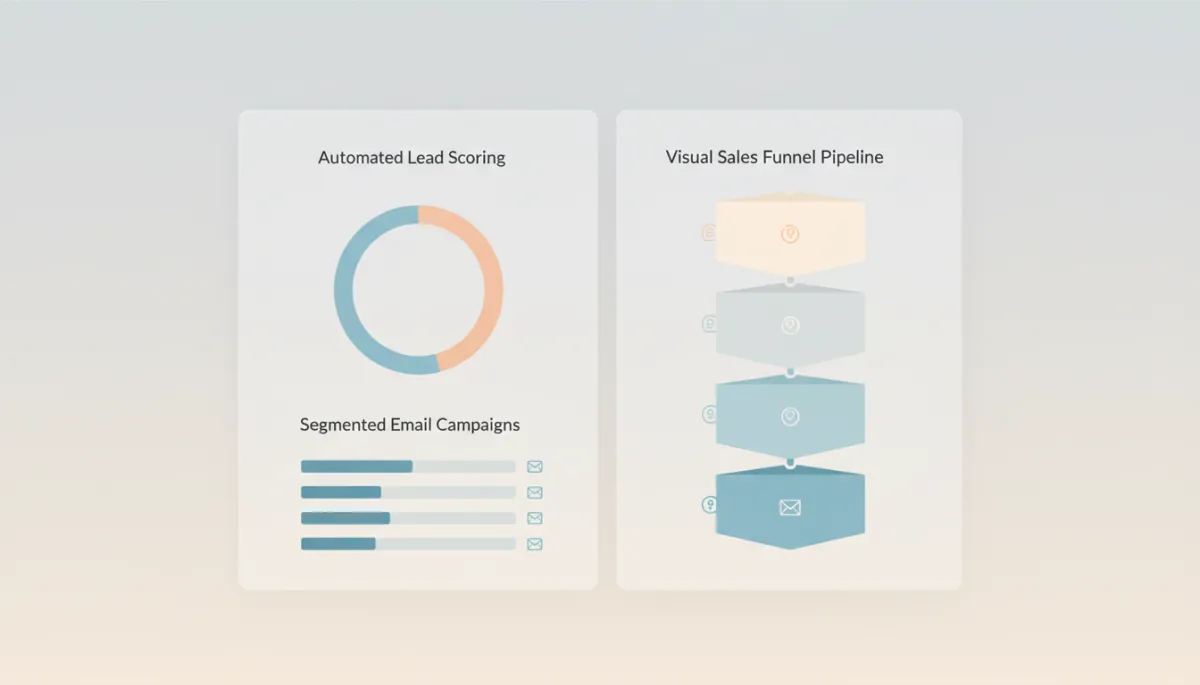
A well‑designed CRM dashboard makes revenue opportunities and gaps instantly visible.
How AI Is Transforming CRM Automation
Modern CRM platforms now embed AI to move beyond static records and basic workflows. AI engines can score leads, predict conversions, and draft follow-ups based on past behaviour and similar customer patterns.
Score leads using behavioural, demographic, and firmographic signals.
Predict which opportunities are most likely to close and when.
Draft follow-up emails and messages that match prior tone and context.
Summarize long call notes and email threads into concise deal insights.
Identify churn risks based on usage drops, support tickets, or sentiment.
Recommend next-best actions for reps across the pipeline.
AI is moving CRM systems from passive record keeping to active revenue orchestration, where the system surfaces what matters most and suggests what to do next.
📌 Key Takeaway: The future of CRM automation is intelligent decision support, not just workflow automation.
Real-World Example: Professional Services Firm
Consider a professional services firm that wants to shorten sales cycles and make revenue more predictable. Their CRM automation workflow looks like this:
Website form submitted.
Lead scored automatically based on role, company size, and intent signals.
Email + SMS triggered with a scheduling link.
Discovery call booked and added to the CRM, with prep tasks.
Proposal sent via integrated e-sign tool and tracked in the pipeline.
Follow-up sequence automated until the deal is won or lost.
Upsell campaign triggered post-sale based on services delivered.
The result is faster response, higher conversions, and a more predictable pipeline—without adding manual work at each step.
Choose Automation Tools That Talk to Each Other
Powerful automation tools are only useful if they work together. Prioritize a CRM platform that integrates cleanly with your email marketing, ad platforms, support desk, and billing systems. This gives you a single, accurate view of every contact—from first click to paid invoice—and enables sophisticated revenue‑driving workflows, such as automatically triggering an upsell campaign when a customer hits a usage milestone or opens a support ticket for a premium feature.
💡 Pro Tip: Start with one or two high‑impact automations, measure their effect on conversion rate and deal size, then expand. Small, well‑designed workflows often outperform bloated, complex setups.
CRM Automation Maturity Framework
To understand where you are—and what to improve—use a simple CRM automation maturity framework:
Stage 1: Contact Database
Store contacts and basic company information.
Follow-up is mostly manual and ad hoc.
Stage 2: Workflow Automation
Email sequences, task creation, and lead routing are automated.
Basic reporting on campaign and pipeline performance.
Stage 3: Revenue Automation
Lead scoring, customer journeys, and pipeline forecasting are in place.
Marketing, sales, and success share a common funnel view.
Stage 4: Revenue Operations System
AI qualification, predictive analytics, and automated expansion revenue.
Full customer lifecycle management across acquisition, retention, and expansion.
📌 Goal: Transform your CRM from a record-keeping tool into a revenue operating system.
CRM Metrics That Actually Matter
To know whether your CRM automation is working, track metrics that tie directly to revenue outcomes, not just activity volume:
Lead Response Time
Lead-to-Opportunity Rate
Opportunity-to-Close Rate
Customer Acquisition Cost (CAC)
Customer Lifetime Value (LTV)
Churn Rate
Revenue Per Customer or Per Account
📌 Key Takeaway: The purpose of CRM automation is not more activity—it is more profitable outcomes.
Turn Post‑Sale Moments into Repeat Revenue
Revenue growth does not stop at the closed‑won stage. Use CRM automation to onboard new customers with guided emails, proactive check‑ins, and helpful resources. Track product usage and satisfaction scores to trigger renewal reminders, expansion offers, or advocacy requests at the right moment. These post‑sale workflows deepen customer engagement, reduce churn, and systematically uncover upsell opportunities—one of the most efficient ways to increase revenue from your existing base.
Future Outlook: CRM Becomes the Revenue Brain
Over the next several years, CRM systems will evolve into the revenue brain of the business. AI agents will manage routine follow-ups, systems will predict churn before it happens, and revenue forecasting will become real-time and scenario-based. Customer journeys will self-optimize as the CRM learns which paths convert and retain best.
The most successful businesses will use CRM systems not just to track customers, but to actively guide growth decisions across marketing, sales, and customer success.
Bringing It All Together
For businesses and agencies, the winning formula is clear: align your CRM strategies with revenue goals, streamline lead management, maintain consistent customer engagement across the sales funnel, and connect the right automation tools into a single, data‑driven system. When every automated touchpoint is intentional and measurable, your CRM stops being a glorified address book and becomes the backbone of predictable, scalable growth.


