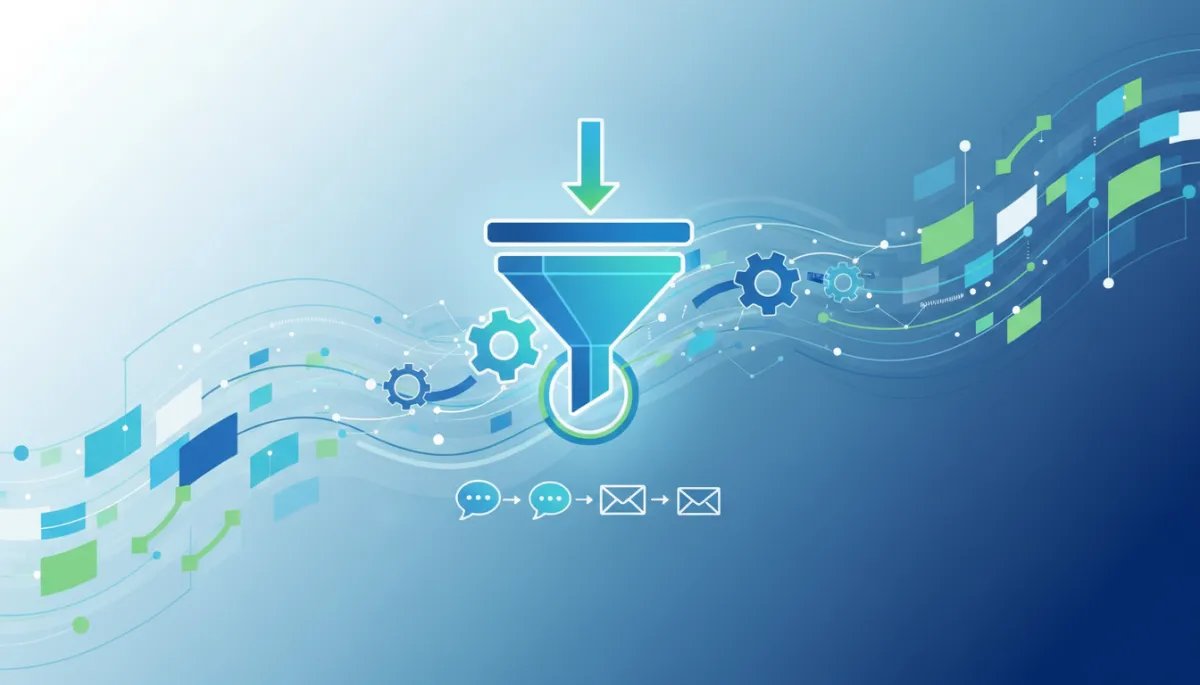
Top CRM for Lead Gen & Follow-Ups 2026
CRM Software, Lead Generation, Automated Follow-Ups
Best CRM for Lead Generation and Automated Follow-Ups in 2026
For agencies and growing businesses, the right CRM software can mean the difference between a leaky pipeline and a predictable revenue engine. In 2026, the best CRM tools combine powerful lead generation features with smart, automated follow-ups so your team never misses a high-intent prospect.
What Makes a CRM “Best” for Lead Generation?
When agencies ask about the best CRM for lead generation, they rarely mean just a contact database. They need a customer relationship management platform that actively helps them attract, qualify, and convert leads across multiple channels—without adding manual work for their team.
Built-in lead capture: forms, pop-ups, chatbots, and landing pages that feed leads directly into your pipeline.
Lead scoring and segmentation: so sales automation targets the right people at the right time.
Marketing and sales alignment: email, SMS, and calling tools integrated into one CRM software stack.
Platforms like HubSpot CRM and Zoho CRM excel here with free or low-cost plans, strong form and chat capture, and AI-powered lead scoring (meetingnotes.com). For service-based agencies, GoHighLevel is often recommended as an all-in-one solution that combines funnels, booking, and CRM in one place (automationclarityhub.com).
Executive Diagnostic: Is Your Current CRM Costing You Leads?
Use this quick self-assessment to see if your current CRM, AI CRM setup, or broader CRM ecosystem is quietly leaking revenue and qualified opportunities:
Are new leads contacted within five minutes, every time, regardless of source?
Can you accurately track every lead source and attribute revenue across the full customer journey?
Do you know your lead-to-close rate by campaign, channel, and rep in real time?
Are follow-ups, nurture sequences, and no-show workflows fully automated, not spreadsheet-driven?
Can leadership see pipeline performance, revenue operations health, and conversion analysis without manual reports?
📌 Key Takeaway: If the answer is “no” to most of these questions, your CRM may be limiting growth more than your marketing, and it’s time to rethink your customer journey automation stack.
Automated Follow-Ups: The Real Revenue Multiplier
Generating leads is only half the battle. Agencies lose deals when reps forget to follow up, send generic messages, or stop nurturing too early. The best CRM tools in 2026 bake automated follow-ups directly into their sales automation engines, turning your playbooks into repeatable workflows.
Multi-step sequences: timed emails, SMS, and task reminders that keep every lead moving.
AI-assisted messaging: tools like Followo draft follow-up emails in your tone and even detect intent (interested, objecting, ghosting) to update deal stages automatically (followo.app).
Omnichannel outreach: CRMs such as Freshsales combine phone, chat, email, and SMS with AI agents that can handle up to 80% of interactions autonomously (techradar.com).
💡 Pro Tip: Start by automating “boring but critical” follow-ups—new lead acknowledgements, post-call recaps, and no-show rescheduling. These alone can rescue a surprising number of opportunities.
How AI Is Changing Lead Generation CRMs
By 2026, AI CRM capabilities are no longer “nice to have.” They sit at the core of modern revenue operations, powering AI lead generation, lead nurturing, and conversational AI at scale. Here’s how leading platforms compare:
GoHighLevel AI: Focused on agencies, its AI helps qualify inbound leads, generate follow-up copy, and optimize funnels based on conversion analysis across your entire CRM ecosystem.
HubSpot AI: Uses predictive lead scoring, content suggestions, and conversation summaries to surface high-intent contacts and recommend next-best actions inside your pipeline management views.
Zoho Zia: Zoho’s AI assistant Zia analyzes engagement data to adjust lead scores, flag at-risk deals, and suggest optimal send times for email and SMS sequences.
Attio AI: Built as an AI-native CRM, Attio automatically creates conversation summaries, surfaces relationship insights, and recommends follow-ups for complex B2B buying journeys.
Across these tools, AI enhances four critical areas: lead scoring (prioritizing who to call next), follow-up generation (drafting tailored emails and SMS), conversation summaries (turning calls and threads into actionable notes), and predictive insights (forecasting which deals and campaigns will convert). Together, they transform your CRM from a static database into a proactive customer journey automation engine.
Real-World Workflow: From Lead to Appointment
To see how this plays out in practice, here’s a simplified workflow that many high-performing agencies now run inside their CRM software:
Prospect fills a form: A visitor opts in on a landing page, chatbot, or ad-specific form. The CRM instantly captures the contact with full lead source and campaign data.
CRM scores the lead: AI lead scoring evaluates fit and intent based on fields, behavior, and past conversion patterns, then places the contact into the right pipeline stage.
AI sends email and SMS: Within minutes, the system triggers a personalized email and SMS sequence, referencing the offer, content, or pain point that drove the opt-in.
Appointment is booked automatically: The messages include a calendar link tied to your CRM. When the prospect books, the appointment, contact, and deal are updated automatically.
Rep receives a summary: Before the call, AI generates a conversation summary and prep brief, including key context, objections, and recommended talking points.
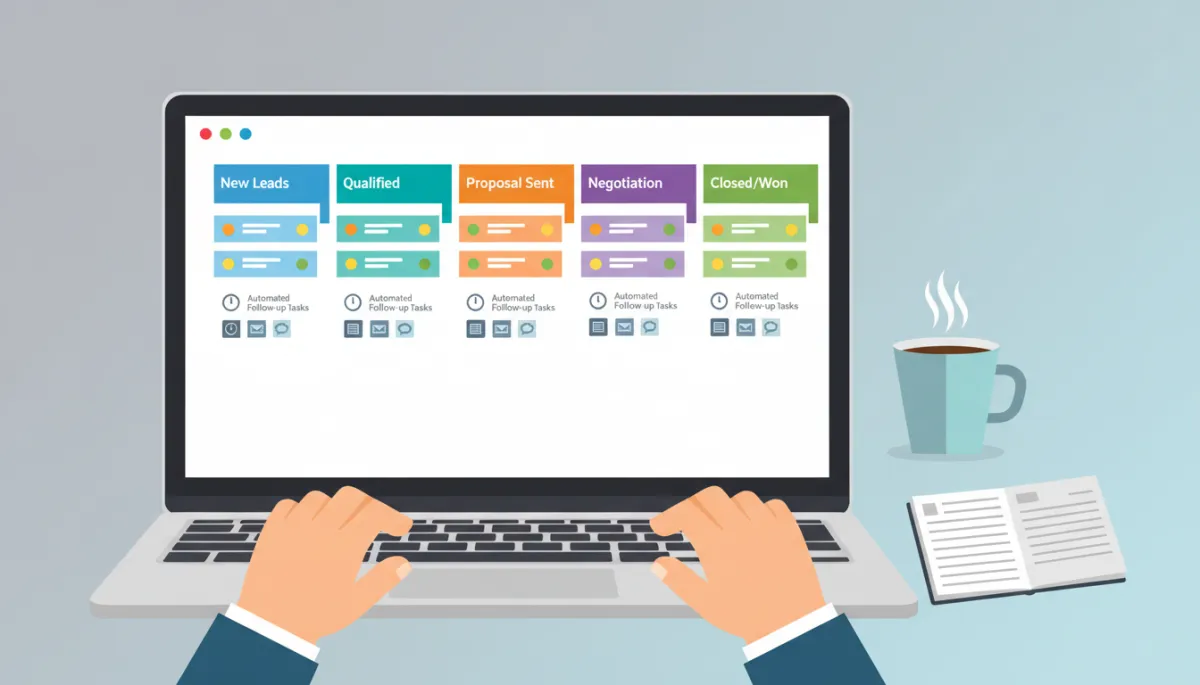
Opportunity moves through the pipeline: After the call, the CRM logs notes, updates the stage, and schedules follow-ups automatically, feeding real-time data into your revenue operations dashboards.
📌 Key Takeaway: When this workflow runs consistently, most of your “lead generation problem” becomes a workflow and follow-up problem—one that modern AI CRMs are built to solve.
Top CRM Software Picks by Agency Use Case
There is no single “best CRM” for every agency, but some tools consistently stand out for lead generation and automated follow-ups:
GoHighLevel – Ideal for marketing and service agencies that want funnels, booking, and CRM in one platform, plus robust sales automation and nurture campaigns (automationclarityhub.com).
HubSpot CRM / Sales Hub – Best for agencies needing a scalable, user-friendly customer relationship management hub with visual workflows and powerful automated follow-ups, starting from a generous free tier (leadopo.com).
Zoho CRM – Great for budget-conscious teams that still want AI lead scoring, web forms, and integrated email outreach (addtocrm.com).
Attio – A flexible, AI-native CRM that adapts to your unique workflows and uses AI to summarize context and suggest follow-ups—especially useful for B2B agencies with complex deal cycles (techradar.com).
CRM Comparison Table: AI, Automation, and Pricing
CRMBest ForAI FeaturesAutomationPricing ModelGoHighLevelAgencies needing all-in-one funnels and CRMStrong – AI lead gen, follow-up copy, call toolsExcellent – deep marketing and sales automationFlat – account-based, not per userHubSpotGrowing teams and RevOps-focused orgsStrong – lead scoring, content, summariesExcellent – visual workflows and playbooksPer user – with tiered feature setsZohoBudget-conscious SMBsGood – Zia insights and scoringGood – solid automation for the pricePer user – affordable entry tiersAttioModern B2B and product-led teamsExcellent – AI-native relationship insightsModerate – strong workflows, lighter marketingPer user – flexible plans
Contrarian Insight: More Leads Are Not Usually the Problem
Many agencies assume the fastest path to growth is “more leads.” In reality, most already generate enough inquiries but lack the revenue operations discipline, CRM ecosystem, and customer journey automation to follow up consistently. Improving response speed, pipeline management, and lead nurturing often produces more revenue than increasing traffic or ad spend.
📌 Strategic Move: Before raising budgets, audit your CRM for gaps in AI CRM capabilities, sales automation, and conversion analysis. Fixing these often unlocks growth from the leads you already have.
How to Choose the Right CRM for Your Agency
To find the best CRM tools for your agency, start with three questions:
Where do most of your leads come from? If you rely on inbound forms and content, prioritize CRMs with strong native lead generation features. If you’re outbound-heavy, look for calling and sequence tools like Pipedrive or Close CRM.
How complex are your follow-ups? Simple pipelines may only need reminders and email drips; high-ticket sales might demand AI-assisted notes, call transcription, and next-best-action suggestions from tools like SugarAI or Freshsales.
Will your team actually use it? Industry feedback is clear: the best customer relationship management platform is the one your team logs into every day. Prioritize intuitive interfaces and clean workflows over flashy, rarely used features.
Most leading CRMs offer free trials, so test real-life scenarios: capturing a new lead, assigning it, triggering automated follow-ups, and tracking results. If your team can do this confidently within a week, you’re close to the right fit.
FAQ: Lead Generation CRMs, AI, and Automation
Which CRM generates the fastest ROI? For many agencies, GoHighLevel and HubSpot generate fast ROI because they combine marketing automation, sales automation, and reporting in one platform. The right choice depends on your pricing model preference (flat vs. per user) and how centralized you want your CRM ecosystem to be.
How quickly should leads be contacted? Industry benchmarks suggest within five minutes. AI lead generation tools and conversational AI can help you hit this consistently by triggering instant responses and routing hot leads to reps.
Can AI replace sales follow-ups? AI CRM tools are excellent at drafting follow-up messages, summarizing conversations, and prioritizing prospects, but they don’t replace human sellers—especially for high-ticket or complex deals. Think of AI as a force multiplier for your existing team.
Is an all-in-one CRM better than multiple tools? All-in-one platforms simplify data, reporting, and pipeline management, which is ideal for most agencies. However, some advanced teams prefer a best-of-breed CRM ecosystem with specialized tools connected via integrations. The best choice depends on your internal tech capacity and appetite for complexity.
What is the biggest CRM mistake agencies make? The most common mistake is treating CRM software as a static database rather than the core of revenue operations. Without clear workflows, automation, and ownership, even the best AI CRM can’t fix inconsistent follow-up and weak lead nurturing.
In 2026, agencies that win are those that treat CRM software not as a static database, but as the engine of their lead generation and sales automation strategy. Choose a platform that captures every opportunity, follows up relentlessly, and gives your team the clarity to focus on what they do best: closing deals and serving clients.


