AI Transforming CRM and Marketing Automation
AI In CRM, Marketing Automation, Digital Marketing Trends
How AI Is Transforming CRM and Marketing Automation
Artificial intelligence is no longer a futuristic add‑on; it is quietly reshaping how businesses manage relationships, run campaigns, and grow revenue. For agencies and in‑house teams alike, AI in CRM and marketing automation is turning scattered data into clear, actionable direction.
Executive Diagnostic: Is Your CRM Ready for AI?
Ask yourself:
Are leads contacted within five minutes?
Can your CRM identify your highest-converting lead sources?
Do sales and marketing share the same customer data?
Can you predict churn before customers leave?
Are follow-ups personalized automatically?
📌 Key Takeaway: If the answer to most of these questions is "no," your CRM is likely storing information rather than creating revenue intelligence.
From Static Databases to Intelligent Customer Relationship Management
Traditional customer relationship management tools were essentially digital Rolodexes: useful for storing contact details, notes, and deal stages, but limited in what they could actually tell you. Today, AI technology is driving a deeper form of Customer Relationship Management that learns from every interaction across email, social, web, and sales touchpoints.
With AI in CRM, systems can score leads based on behavior, predict which accounts are likely to churn, and recommend the next best action for sales or marketing. Instead of manually guessing who to call or which segment to target, teams get prioritized lists backed by data. This kind of CRM transformation turns CRMs from passive systems of record into active systems of intelligence.
Smarter Marketing Automation With AI at the Core
Marketing automation has long promised “the right message at the right time,” but in practice many workflows still rely on rigid rules: if a contact opens an email, send another; if they click, assign to sales. AI changes this by continuously analyzing patterns in engagement, purchase history, and content consumption to refine who receives what, when, and on which channel.
Predictive segmentation: AI clusters customers into micro‑segments based on likelihood to buy, upgrade, or unsubscribe.
Content personalization: algorithms recommend subject lines, offers, and creatives most likely to resonate with each profile.
Send‑time optimization: campaigns are triggered at the individual’s best engagement window, not a generic schedule.
For agencies, this means being able to manage more complex, multi‑channel programs without adding headcount. For brands, it means improving conversion and retention while reducing manual campaign setup and guesswork.
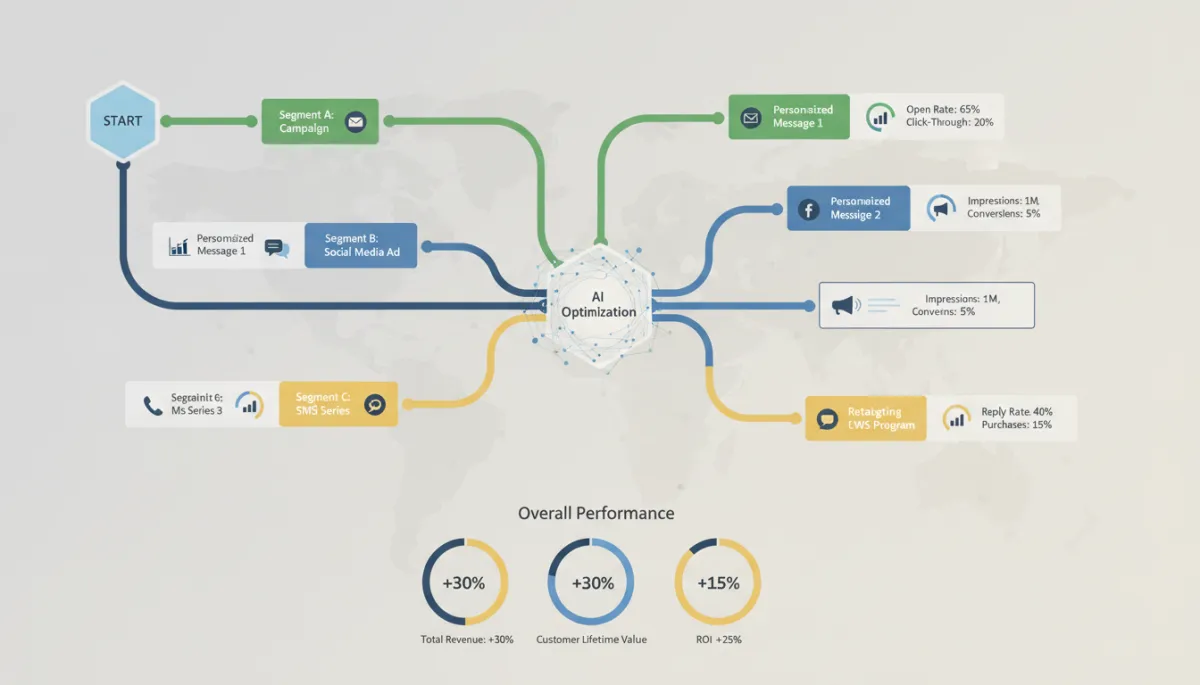
AI-optimized journeys help teams scale personalization without overwhelming operations.
AI Technology at the Heart of CRM Transformation
The real power of AI technology in CRM transformation lies in its ability to connect dots humans simply cannot see at scale. By ingesting data from ads, website analytics, email platforms, call logs, and even support tickets, AI surfaces patterns that inform both sales strategy and creative direction. It can highlight which campaigns influence pipeline, which channels actually drive revenue, and which customer journeys are most profitable over time.
💡 Pro Tip: Start with one or two high‑impact use cases, such as lead scoring or churn prediction, before rolling AI across your entire Customer Relationship Management stack.
Contrarian Insight: AI Does Not Fix Bad CRM Data
One of the biggest misconceptions is that AI automatically improves results. In reality, AI amplifies whatever data exists inside the system.
Poor data quality, incomplete records, inconsistent lead sources, and broken workflows often become more visible—not less—when AI is introduced.
📌 Strategic Takeaway: Before investing heavily in AI, invest in clean data and disciplined processes.
Real-World Example: AI-Powered Lead Management
A professional services firm receives 200 leads monthly. Their AI-enhanced CRM:
Scores incoming leads
Prioritizes high-intent prospects
Sends personalized email follow-ups
Books meetings automatically
Alerts sales reps only when human intervention is needed
Result:
47% faster response time
29% higher lead-to-opportunity conversion
More predictable pipeline forecasting
AI CRM Maturity Framework
Use this framework to understand where your organization is today and what it will take to reach AI-driven revenue intelligence.
Stage 1: Data Storage
Contact management
Manual follow-up
Stage 2: Workflow Automation
Email sequences
Lead routing
Task automation
Stage 3: Predictive Intelligence
Lead scoring
Churn prediction
Opportunity forecasting
Stage 4: Revenue Orchestration
AI recommendations
Automated customer journeys
Predictive growth planning
📌 Goal: Move from CRM management to revenue intelligence.
Aligning With Emerging Digital Marketing Trends
Many key digital marketing trends now assume AI‑enabled infrastructure as a baseline. Privacy‑first measurement, cookieless targeting, conversational experiences, and real‑time optimization all depend on intelligent data processing. Businesses and agencies that invest in AI‑driven CRM and marketing automation today are better positioned to adapt as platforms, regulations, and customer expectations keep shifting.
Ultimately, AI in CRM and marketing automation is not about replacing marketers or salespeople. It is about freeing them from repetitive tasks so they can focus on strategy, creativity, and genuine human connection. Those who embrace this shift will find their Customer Relationship Management systems evolving from simple databases into dynamic engines for growth.
Future Outlook: CRM Becomes the Revenue Brain
Over the next several years, AI will transform CRM systems from operational databases into decision-making platforms.
Future CRM systems will:
Predict buying behavior
Recommend next-best actions
Forecast revenue in real time
Detect churn risks automatically
Coordinate marketing, sales, and customer success activities
The businesses that win will treat CRM not as software, but as a strategic growth engine.
Frequently Asked Questions
What is AI in CRM?
AI in CRM uses machine learning and predictive analytics to automate tasks, improve customer insights, and help teams make better decisions.
How does AI improve marketing automation?
AI improves targeting, personalization, segmentation, and timing, helping businesses deliver more relevant messages with less manual effort.
Is AI CRM only for large companies?
No. Many modern CRM platforms now include AI features specifically designed for small and medium businesses.
What AI feature delivers the fastest ROI?
Lead scoring and automated follow-up typically generate the fastest return because they directly improve response speed and conversion rates.


