Why Agencies Choose GoHighLevel in 2026
Agency Software, CRM Solutions, Marketing Automation
Why Are So Many Agencies Switching to GoHighLevel in 2026
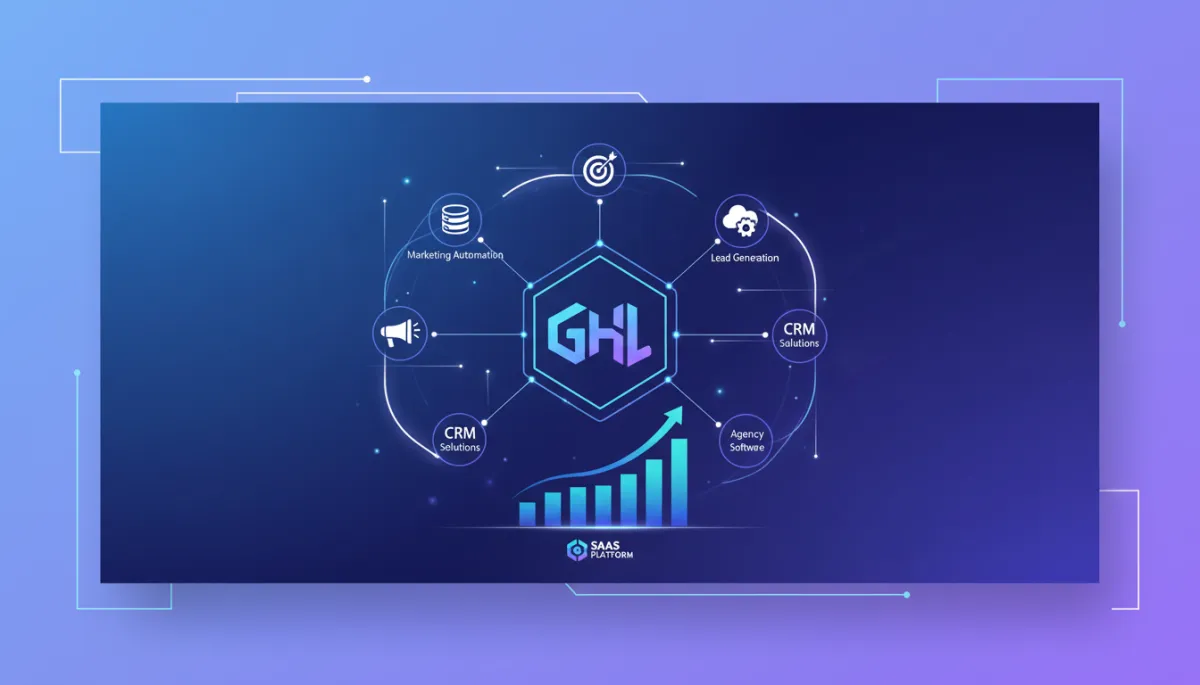
Agencies are under pressure to generate leads, prove ROI, and scale without ballooning software costs or headcount. That is exactly why so many are consolidating their tech stack into GoHighLevel—a single Agency Software platform combining CRM solutions, marketing automation, funnels, and even white‑label SaaS resale.
This article goes beyond a traditional platform review. You will see how GoHighLevel can function as an Agency Operating System™—a framework‑driven way to run the entire business across Acquisition, Conversion, Automation, Delivery, and Revenue. Along the way, you will get a clear Agency Maturity Model, an Agency Revenue Flywheel, an Operational Leakage Framework™, and a simple Agency Economics Model you can use to benchmark and redesign your operations.
📌 Key Takeaway: Treating GoHighLevel as an operating model, not just another tool, is what separates agencies that scale from those that churn through clients and staff.

GoHighLevel as an Agency Operating System™: The A‑C‑A‑D‑R Framework
To use GoHighLevel strategically, you need to see it as an Agency Operating System™, not just a CRM or funnel builder. One practical way to do that is by mapping your business onto the A‑C‑A‑D‑R Framework:
Acquisition – How you attract and capture demand (traffic, offers, funnels, lead capture).
Conversion – How you turn leads into qualified opportunities, appointments, and sales.
Automation – How you orchestrate follow‑up, routing, and workflows without human effort.
Delivery – How you fulfill, communicate, and report on client results consistently.
Revenue – How you monetize through retainers, performance fees, and SaaS subscriptions.
💡 Pro Tip: Audit your current stack by asking, “Which tools do we use for each A‑C‑A‑D‑R layer—and which of those can GoHighLevel replace or centralize?”
Mapping the A‑C‑A‑D‑R Layers Inside GoHighLevel
Acquisition Layer: GoHighLevel handles landing pages, funnels, web chat widgets, forms, surveys, and call tracking. This becomes your standardized lead generation engine across all clients and offers.
Conversion Layer: Pipelines, opportunity stages, calendars, and automated reminders turn raw leads into booked appointments and closed deals. Every stage is captured in a single CRM solution.
Automation Layer: Workflows, triggers, Smart Lists, and AI‑generated messaging orchestrate marketing automation across email, SMS, voice, and social DMs with minimal manual work.
Delivery Layer: Pipelines, tasks, notes, and reporting dashboards give your team a shared view of fulfillment, while review requests, reputation management, and reporting snapshots keep clients in the loop.
Revenue Layer: SaaS Mode, Stripe rebilling, upsell funnels, and account‑based permissions enable you to layer SaaS platform revenue on top of retainers and performance fees.
“High‑performing agencies don’t ask, ‘What can this tool do?’ They ask, ‘What operating model does this tool enable—and how do we standardize it across every client?’”
From Tool Chaos to a Unified Agency Software Stack
Most agencies grew up on a patchwork of landing page builders, email tools, SMS platforms, call tracking, and separate CRM solutions. Every new client meant another login, another integration, and more room for failure. GoHighLevel was built specifically to solve this problem for agencies: a single SaaS platform with CRM, pipelines, funnels, calendars, reviews, and multi‑channel messaging in one login (GoHighLevel Features, 2026).
For agencies, that consolidation is more than convenience. It removes integration fragility, cuts subscription bloat, and gives leadership a single source of truth for lead generation, pipeline value, and revenue attribution across campaigns and channels.
📌 Key Takeaway: A unified stack is the foundation for every other framework in this article—maturity, flywheel, economics, and AI agents all depend on clean, centralized data.
Why GoHighLevel Stands Out as an Agency‑First CRM Solution
Unlike generic CRMs, GoHighLevel is opinionated around agency workflows. It offers unlimited contacts, visual sales pipelines, a unified inbox for SMS, email, phone, and social DMs, as well as advanced Smart Lists for segmentation. Agencies can track every touchpoint—from ad click to closed deal—inside one CRM solution, then trigger automations based on behavior, stage, or attribution model.
For growing agencies, the ability to clone “Snapshots” of proven funnels, automations, and settings into new sub‑accounts is transformative. Onboarding a new client becomes a matter of minutes, not days, and delivery becomes standardized instead of reinvented every time.
💡 Pro Tip: Treat every successful client build as a “mini product.” Turn it into a Snapshot, document the promise and process, and reuse it across a niche or vertical.
The Agency Maturity Model: From Tool Fragmentation to SaaS‑Enabled Agency
To understand where GoHighLevel fits, it helps to benchmark your current level of operational sophistication. The Agency Maturity Model below shows a typical progression from chaotic tools to a true SaaS‑Enabled Agency built on an Agency Operating System™:
Stage 1 – Tool Fragmentation: Multiple disconnected tools for CRM, email, SMS, funnels, reporting. Data is scattered, reporting is manual, and performance is hard to measure. Most agencies start here.
Stage 2 – Integrated Stack: Fewer tools, more integrations, and some centralized reporting. Still fragile, but leaders start to see the value of a single source of truth for lead generation and sales.
Stage 3 – Automated Delivery: Core client journeys are automated—lead capture, nurture, booking, and follow‑up. GoHighLevel workflows and pipelines replace manual tasks and ad‑hoc follow‑up.
Stage 4 – Productized Services: Offers are standardized into repeatable packages. Snapshots, templates, and SOPs mean every new client is deployed from a proven blueprint rather than from scratch.
Stage 5 – SaaS‑Enabled Agency: The agency sells both services and software. Clients log into a white‑label portal, pay recurring SaaS fees, and are deeply embedded in your SaaS platform ecosystem.
📌 Key Takeaway: GoHighLevel can support you at every stage, but the biggest gains come when you deliberately move from Integrated Stack to Productized Services and finally to a SaaS‑Enabled Agency.
Marketing Automation and Lead Generation at Scale
Modern agencies live or die by their ability to automate follow‑up and nurture. GoHighLevel includes a visual workflow builder where triggers such as “form submitted,” “review received,” or “payment failed” can launch sophisticated marketing automation sequences across email, SMS, voice drops, and social messaging (GoHighLevel Updates, 2026).
Combined with drag‑and‑drop funnels, booking calendars, and AI‑enhanced web chat, it becomes a complete lead generation engine. Agencies can deploy high‑converting funnels, capture leads from ads and organic traffic, then nurture them automatically until they book appointments or purchase. For clients, this feels like having a 24/7 sales assistant; for agencies, it becomes a repeatable, productized service.
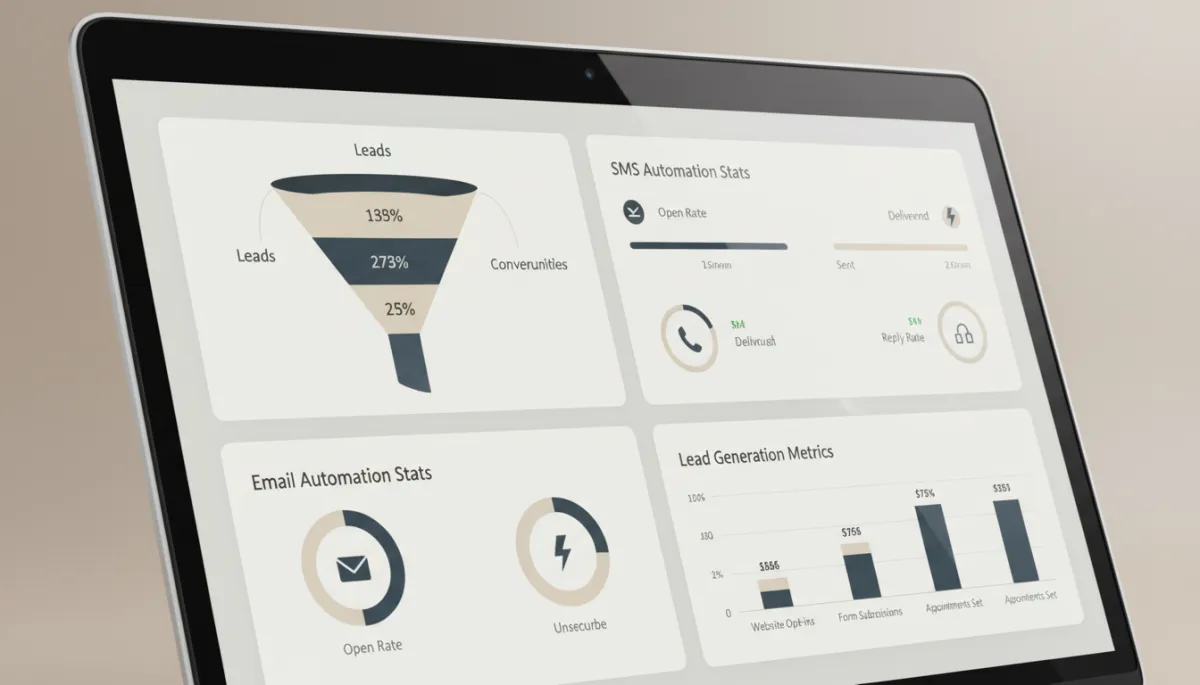
Unified reporting reveals which campaigns and automations actually drive revenue.
The Operational Leakage Framework™: Where Fragmented Stacks Destroy Profit
Before you can fix your operations with an Agency Operating System™, you need to see where value is leaking out of the business. The Operational Leakage Framework™ highlights the five most common leaks that GoHighLevel is designed to plug:
Tool Leakage: Paying for overlapping tools that do not talk to each other—multiple CRMs, funnel builders, email platforms, and call tracking systems. This inflates costs and fragments data.
Follow‑Up Leakage: Leads that never receive a second touch, appointments that are not reminded, and proposals that are never followed up on because there is no centralized marketing automation layer.
Reporting Leakage: Data buried in spreadsheets and platform‑specific dashboards. Leaders cannot see which channels, offers, or clients are actually profitable, so they make decisions on gut feel instead of facts.
Delivery Inconsistency: Every account manager “does things their own way.” No standardized pipelines, no repeatable onboarding, and no shared templates mean results vary wildly from client to client.
Retention Leakage: Clients churn because they do not see clear results or consistent communication. There is no automated cadence for reporting, reviews, upsells, or renewal conversations.
💡 Pro Tip: Walk through a recent 90‑day period and tag every lost deal or churned client with one of these leakage types. Then design one GoHighLevel workflow, Snapshot, or dashboard to address each leak.
The SaaS Platform Advantage: From Agency to Software Company
A core reason agencies are switching is GoHighLevel’s SaaS Mode. On the SaaS Pro plan, you can white‑label the entire system, set your own pricing tiers, and bill clients directly via Stripe. Instead of simply charging retainers for services, you become a recurring‑revenue SaaS platform provider, offering your own branded “all‑in‑one marketing portal” built on GoHighLevel’s infrastructure.
This shift fundamentally changes the economics of an agency. Margins increase, churn decreases (because clients are embedded into your software), and your valuation begins to resemble that of a technology company rather than a pure services firm.
The Agency Revenue Flywheel: How Automation Compounds Profit Over Time
When you implement GoHighLevel as an Agency Operating System™, you unlock a powerful Agency Revenue Flywheel. Instead of chasing one‑off wins, your systems compound over time:
Automation Reduces Delivery Costs: Workflows, templates, and Snapshots handle repetitive tasks—onboarding, nurture, reminders, reporting—so your team spends more time on strategy and less on admin.
Lower Costs Improve Margins: With fewer hours per client and fewer tools to pay for, your gross margins increase—even if pricing stays the same.
Better Margins Enable Better Service: Higher margins give you room to invest in strategy, creative, and client experience, which improves outcomes and perceived value.
Improved Outcomes Increase Retention: Clients who see clear, consistent results and transparent reporting stay longer and buy more, which stabilizes revenue and reduces sales pressure.
Retention Creates Investment Capacity: Predictable revenue and lower churn free up cash and leadership bandwidth to further improve your systems, Snapshots, and AI automations.
Each loop through this flywheel makes your agency more efficient, more profitable, and harder to compete with. GoHighLevel is the infrastructure that keeps the flywheel spinning.
Pricing: How GoHighLevel Compares to Other Agency Software
In 2026, GoHighLevel offers three main tiers (Pricing, 2026):
Starter – $97/month: core features, up to three sub‑accounts; ideal for solo marketers testing the waters.
Unlimited – $297/month: unlimited sub‑accounts, white‑label desktop app, API access; the default choice for most agencies.
SaaS Pro – $497/month: unlocks SaaS Mode, automated client provisioning, rebilling, and priority support.
Compared with alternatives like HubSpot, Vendasta, or GetResponse MAX—often ranging from $1,000 to $3,000+ per month for serious agency use—GoHighLevel’s flat pricing and unlimited sub‑accounts are compelling. Agencies do need to budget for usage‑based costs such as SMS, calls, and AI usage, but even then, total monthly spend is typically lower than stitching together separate tools at scale.
A Simple Agency Economics Model: How GoHighLevel Impacts Profit and Valuation
To evaluate GoHighLevel as an Agency Operating System™, look at your economics in four buckets:
Service Retainers: Monthly fees for done‑for‑you campaigns, media buying, and strategy.
SaaS Revenue: Monthly subscriptions for access to your white‑label SaaS platform (GoHighLevel in SaaS Mode), often at 2–5x your own license cost per client.
Software Costs: What you pay for tools. Consolidating into GoHighLevel typically reduces this line item by replacing multiple point solutions with a single platform plus usage fees.
Operational Efficiency: How many clients one account manager can handle, how many campaigns one strategist can oversee, and how much time is spent on manual tasks versus high‑value work.
When you centralize operations in GoHighLevel:
Retainers stay the same or increase because your perceived value and results improve.
SaaS revenue grows as more clients adopt your portal and stay for the long term.
Software costs decrease as you eliminate redundant subscriptions and consolidate billing.
Operational efficiency increases because automation and standardization let each team member manage more revenue with less stress.
The result is higher EBITDA margins and more predictable recurring revenue—two of the biggest drivers of agency valuation multiples when you eventually sell or raise capital.
Implementation: What a Realistic Rollout Looks Like
A successful migration to GoHighLevel should be treated as a structured project, not an impulsive tool swap. Agencies typically start by mapping existing funnels, automations, and reporting needs, then recreating or improving them in GoHighLevel using Snapshots. Core steps include domain and email setup, CRM data import, pipeline creation, and configuring marketing automation workflows for each service line.
Most small agencies can implement a solid Minimum Viable Stack in 30–60 days, then iterate. Larger teams often phase the rollout by client segment or vertical. The key is to standardize as much as possible—templates, funnels, automations—so every new client can be deployed quickly and consistently.
💡 Pro Tip: Design your first “Agency Operating System™ Snapshot” for one niche and one offer. Only after it works reliably should you clone and adapt it to other verticals.
The Rise of AI Agents Inside GoHighLevel: Automating the Agency Back Office
GoHighLevel’s AI features are moving beyond simple content suggestions. Over the next few years, AI agents will increasingly handle core operational tasks inside your Agency Operating System™:
Onboarding Automation: AI‑driven checklists and workflows that collect client assets, verify tracking, configure integrations, and populate pipelines without your team manually chasing details.
Lead Qualification: AI chat and SMS agents that ask screening questions, score leads, and route only qualified prospects to sales calendars, reducing no‑shows and wasted calls in your CRM solution.
Workflow Execution: Agents that watch for events (form submissions, pipeline changes, payment failures) and automatically trigger the right marketing automation sequences or internal tasks.
Reporting & Insights: AI that assembles weekly or monthly performance summaries, highlights anomalies, and drafts client‑ready reports directly from GoHighLevel dashboards and attribution data.
Support Routing: AI that triages inbound messages from the unified inbox, identifies intent (billing, tech issue, campaign question), and routes or responds according to your playbooks.
Sales Follow‑Up: AI‑assisted sequences that personalize follow‑up based on behavior, objections, and history—keeping deals warm without overwhelming your sales team.
The agencies that win with AI will not just “add AI tools.” They will embed AI agents into a centralized operating system where data, workflows, and communication already live.
How GoHighLevel Compares to Leading Alternatives
HubSpot offers deeper enterprise CRM capabilities and refined reporting, but its per‑seat pricing and lack of white‑label SaaS make it expensive for agencies with many SMB clients. Vendasta competes closely on white‑label resale but is often pricier at scale and relies on a marketplace of third‑party apps. Tools like Zoho One, Perspective Funnels, and GetResponse MAX excel in specific areas—back‑office integration, mobile‑first funnels, or email marketing—but do not match GoHighLevel’s agency‑centric, all‑in‑one approach.
For agencies aiming to productize services, resell software, and manage many smaller clients profitably, GoHighLevel is usually the most strategically aligned choice. For agencies moving up‑market into complex enterprise deals, a hybrid approach—GoHighLevel for SMBs, HubSpot or Salesforce for large accounts—can be optimal.
Why Most Agencies Fail with GoHighLevel
Despite its potential, many agencies never realize the full benefits of GoHighLevel. The problem is rarely the platform itself—it is how the platform is implemented. Four patterns show up again and again:
Poor Process Design: Agencies try to “wing it” inside GoHighLevel without first mapping their client journey, internal handoffs, and reporting cadence. The result is a cluttered account with half‑finished workflows and no clear operating model.
Over‑Customization: Every client gets a bespoke setup, custom fields, and unique workflows. This feels client‑centric in the short term but destroys scalability, makes training impossible, and prevents you from building reusable Snapshots and templates.
Lack of Standardization: No standard pipelines, naming conventions, or dashboard views. Team members cannot move between accounts easily, and leaders cannot compare performance across clients because nothing is normalized.
Tool‑First Thinking: Leadership expects GoHighLevel to “fix” the business without changing offers, pricing, or delivery models. They add a powerful tool on top of a broken process, then blame the tool when results do not improve.
📌 Key Takeaway: GoHighLevel is an amplifier. If your processes are clear and standardized, it will scale them beautifully. If your processes are chaotic, it will scale the chaos.
Expert Insights: When GoHighLevel Is (and Isn’t) the Right Fit
Agencies switching to GoHighLevel for the right reasons see the strongest ROI. It excels when your model relies on repeatable offers, standardized funnels, and high client volume. If your team is willing to invest in process design—building robust marketing automation workflows, templates, and Snapshots—the platform becomes a force multiplier for both delivery and profitability.
Conversely, if your agency mainly sells bespoke consulting, deep custom dev, or enterprise‑grade account‑based marketing, you may outgrow GoHighLevel’s CRM depth and prefer a heavier system. The smartest agencies treat GoHighLevel as the standardized engine for their scalable offers, while keeping room in their stack for specialized tools where necessary.
Frequently Asked Questions About GoHighLevel for Agencies
1. What is GoHighLevel in simple terms? (Beginner)
GoHighLevel is an all‑in‑one Agency Software platform that replaces multiple tools—like your CRM, funnel builder, email system, SMS tool, booking app, and review software—with a single login. It is built specifically for agencies and service businesses to manage lead generation, nurture, sales pipelines, and client reporting in one place, while offering white‑label options for reselling it as your own software.
2. How does GoHighLevel handle marketing automation? (Intermediate)
GoHighLevel includes a visual workflow builder that lets you automate follow‑up across email, SMS, voice, and social messaging. You can trigger workflows from events like form submissions, appointment bookings, review activity, or pipeline changes. Advanced logic (If/Then branches, tags, delays, and AI‑generated content) enables highly personalized marketing automation that runs 24/7, increasing conversions without adding staff.
3. Is GoHighLevel secure and scalable enough for a growing agency? (Advanced)
Yes. GoHighLevel is designed for multi‑client, multi‑location agencies, with role‑based permissions, audit trails, and API access for deeper integrations. It supports unlimited sub‑accounts on higher tiers and offers HIPAA and dedicated IP add‑ons for regulated or high‑volume senders. For most SMB‑focused agencies, it scales comfortably; for heavy enterprise requirements, pairing it with more specialized analytics or data warehouses can be prudent.
4. How does GoHighLevel compare to HubSpot and Vendasta?
HubSpot leads in enterprise‑grade CRM depth and polished reporting but is far more expensive per seat and lacks white‑label SaaS resale. Vendasta is closer to GoHighLevel with its white‑label marketplace, yet typically carries higher costs at scale. GoHighLevel sits in the sweet spot for agencies serving many SMB clients: flat pricing, unlimited sub‑accounts, integrated CRM solutions, and a built‑in SaaS platform model.
5. What does a realistic monthly budget for GoHighLevel look like?
Beyond the base license ($97–$497/month), agencies should factor in SMS, voice, and email usage, plus any AI add‑ons. Small teams might spend $105–$150/month all‑in, while larger agencies using AI heavily can reach $400–$600/month or more. Even at higher usage, this often undercuts the combined cost of separate funnel builders, CRMs, email tools, and call tracking subscriptions.
Internal Link Opportunities
“How to Design a High‑Converting Lead Generation Funnel for Local Clients”
“Agency Pricing Models: Retainers, Performance, and SaaS Revenue Compared”
“Step‑by‑Step GoHighLevel Implementation Checklist for Marketing Agencies”
Related Topics to Explore Next
White‑Label SaaS Strategies for Digital Agencies
Building Recurring Revenue with CRM‑Powered Service Packages
AI in Agency Operations: From Content Creation to Voice Agents
Social Media Snippets
LinkedIn: “Agencies are ditching 6–8 tools and standardizing on GoHighLevel—an all‑in‑one Agency Software stack that combines CRM solutions, marketing automation, and a white‑label SaaS platform. Here’s why the switch is happening in 2026.”
X / Twitter: “Your agency doesn’t need 10 tools to run lead generation and nurture. Many are moving to GoHighLevel’s unified CRM + automation stack—and turning it into their own SaaS. Here’s what that shift looks like.”
Facebook: “Thinking about switching to GoHighLevel? We break down features, pricing, implementation, and how agencies are using it to launch their own SaaS products in 2026.”
Final Thoughts: Should Your Agency Switch to GoHighLevel?
Agencies are not adopting GoHighLevel because it is trendy; they are doing it because the economics and operations make sense. By unifying CRM solutions, marketing automation, funnels, and communications into a single SaaS platform, they reduce overhead, accelerate delivery, and unlock new recurring revenue streams. If your growth depends on scalable, repeatable lead generation and productized services, GoHighLevel deserves serious consideration as the backbone of your agency stack.
The agencies that will win in 2026 and beyond are not just “using GoHighLevel.” They are building a framework‑driven Agency Operating System™—anchored in the A‑C‑A‑D‑R model, guided by the Agency Maturity Model, protected by the Operational Leakage Framework™, and powered by an Agency Revenue Flywheel that compounds over time. GoHighLevel simply happens to be the most agency‑aligned platform to make that operating model real.


